

 See My Latest Article on HelloNation
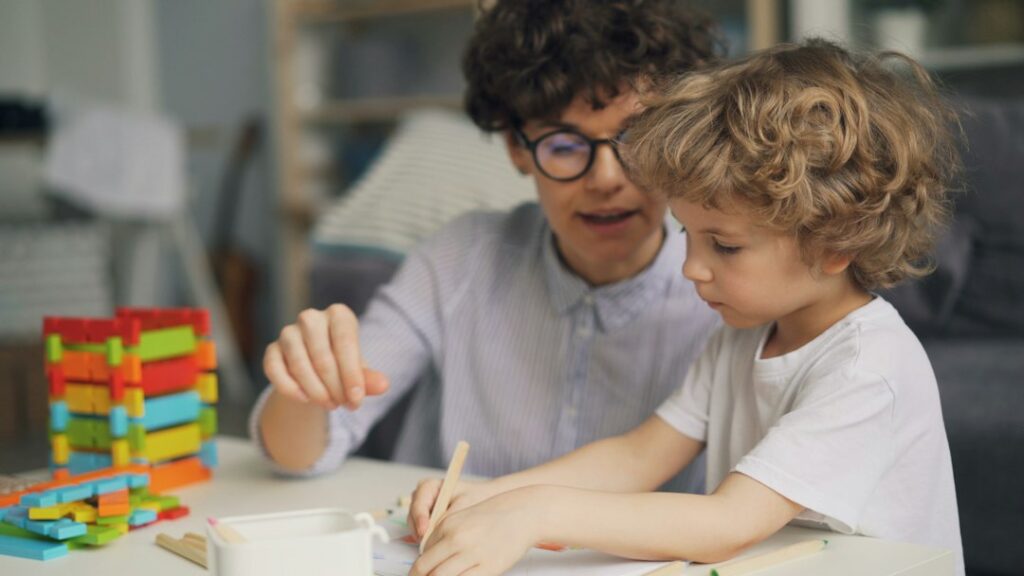
What are social skills, and why do they matter?
Social skills are the abilities children use to communicate, cooperate, understand other people, manage emotions, and participate in shared activities. They include more than talking and making friends. A child is also using social skills when waiting for a turn, noticing that someone looks upset, asking for help, joining a game, or adjusting behavior in a new setting.
These skills develop gradually. Children may understand social expectations in one environment but struggle to use them in another. A child who participates comfortably at home may become quiet at school, overwhelmed in a crowded gathering, or unsure how to enter a playground game.
Social development is influenced by age, temperament, language, attention, sensory processing, motor skills, learning differences, and past experiences. Comparing a child too closely with classmates can create unnecessary concern. A better question is whether the child is making progress and gaining practical ways to participate.
How can parents teach social skills during everyday activities?
Children usually learn social skills most effectively through repeated practice in ordinary situations. Short, predictable teaching moments often work better than lengthy explanations.
During play, adults can model simple language:
- “Can I play too?”
- “Your turn, then my turn.”
- “I do not like that. Please stop.”
- “Let’s think of another idea.”
- “You look frustrated. Do you need help?”
It helps to describe the behavior being taught rather than giving broad directions such as “Be nice” or “Act appropriately.” Specific instructions are easier to understand:
- “Look toward your brother when he is talking.”
- “Ask before taking the toy.”
- “Wait until she finishes speaking.”
- “Tell me with words or a gesture that you need a break.”
Praise should also be specific. Saying, “You waited while your sister finished,” gives a child useful information about what went well.
Household routines provide natural practice. Preparing a snack can involve requesting ingredients, sharing space, following steps, and solving small problems. Cleaning up toys can involve sorting, cooperation, and responding to another person’s suggestion.
What activities help children practice cooperation and communication?
Structured activities can reduce uncertainty and make social learning more manageable. The goal is not to force constant interaction. The goal is to create opportunities with a clear beginning, predictable expectations, and enough support.
Helpful activities may include:
- Building something together with blocks, paper, or recycled materials
- Taking turns during a simple board or card game
- Cooking with shared jobs, such as mixing, measuring, and cleaning
- Acting out common situations with puppets or stuffed animals
- Practicing how to join a game, ask for help, or handle a disagreement
- Reading stories and discussing what each character may be thinking or feeling
- Walking, biking, or playing outdoors while practicing shared rules and safety
For children who become overwhelmed in busy environments, start with one familiar peer or a small group. A brief visit may be more productive than a long gathering. In Pickerington, seasonal changes can affect opportunities for outdoor play, so families may need indoor alternatives during very hot, cold, wet, or icy conditions. Movement breaks, quiet play areas, and predictable routines can help children stay engaged throughout the year.
How can adults support children who have trouble joining play?
Entering an established group can be difficult even for children who communicate well. Adults can teach a simple sequence:
1. Watch what the children are doing.
2. Move nearby without interrupting.
3. Ask a related question or make a relevant comment.
4. Request a role or offer an idea.
5. Accept the answer and try another option if needed.
For example, a child might say, “Can I be the person who builds the bridge?” or “I have a red car. Can it go on your track?”
Some children benefit from practicing these words at home before a social event. Visual reminders, role-play, or a short story about what will happen can reduce uncertainty. Adults should avoid speaking for the child immediately, but they can provide a prompt, choice, or opening sentence.
If a child is refused, the experience can be acknowledged without treating it as a personal failure. “They said no to that game. Let’s see if there is another activity,” teaches flexibility and problem-solving.
What should parents do when children struggle with conflict?
Conflict is part of learning to interact. Children need guidance for repairing problems, not only instructions to avoid them.
First, help everyone become calm enough to think. A child who is crying, yelling, hiding, or physically tense may not be able to process a long explanation. Once calm, keep the discussion brief:
- What happened?
- What were you trying to do?
- How did the other person respond?
- What could you try next time?
- Is there something that needs to be repaired?

A useful repair may be an apology, returning an object, rebuilding something, checking on another child, or agreeing to a different rule. Forced apologies may produce words without understanding. Children often need help identifying the impact of their behavior before they can make a sincere repair.
Adults should also distinguish accidents from intentional actions. A child who bumps someone while rushing needs support with body awareness and slowing down. A child who repeatedly takes materials may need direct teaching about ownership, turn-taking, and boundaries.
How do language, sensory, and developmental differences affect social learning?
Some children understand social situations but have difficulty expressing themselves quickly. Others may miss facial expressions, struggle with flexible thinking, or become distracted by noise, movement, clothing, lighting, or crowded spaces. These differences can look like defiance, disinterest, or poor manners when the child may actually be overwhelmed or unsure what to do.
Support may include:
- Using short, concrete language
- Offering extra time to respond
- Pairing spoken directions with gestures or pictures
- Practicing one skill at a time
- Reducing unnecessary noise or visual clutter
- Providing a quiet place to regroup
- Allowing communication through speech, signs, gestures, writing, or an electronic device
- Preparing the child for changes in plans
Social skills should not require a child to hide a disability or imitate peers constantly. Eye contact, facial expressions, movement, and conversational style vary across individuals. The focus should be on safety, mutual understanding, communication, consent, and meaningful participation.
When should a family seek additional guidance?
Additional guidance may be useful when social difficulties are persistent, interfere with school or family life, cause significant distress, or appear alongside concerns about communication, learning, attention, motor development, sleep, or emotional regulation.
Examples that deserve attention include:
- A child rarely communicates needs in any form
- A child consistently cannot participate in age-expected routines despite support
- Social situations lead to frequent shutdowns, panic, aggression, or withdrawal
- There is a noticeable loss of previously developed communication or social abilities
- Difficulties occur across multiple settings rather than only during one temporary transition
Families can begin by discussing specific observations with the child’s pediatric provider, teacher, or school support team. Written examples are more helpful than general descriptions. Record what happened before the difficulty, what the child did, what support was offered, and what helped.
Progress may appear as a child asking for a break instead of leaving suddenly, tolerating a short turn-taking game, recovering more quickly after disappointment, or finding a new way to communicate with peers. These practical changes are meaningful signs of developing social competence.